
Description:
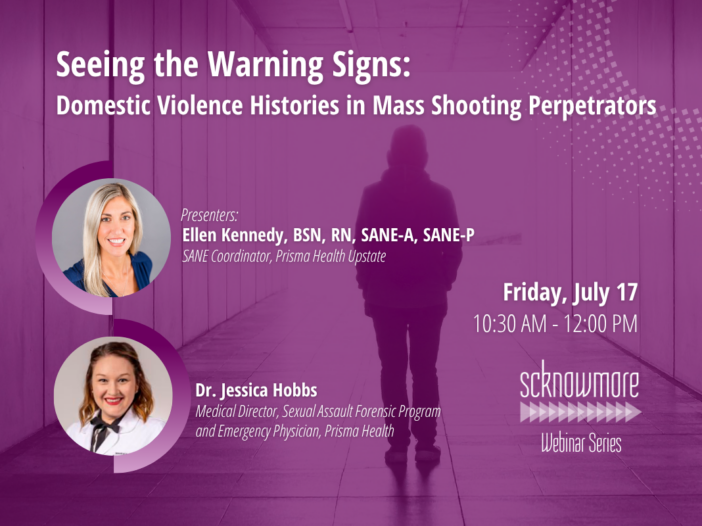
Research over the past decade has demonstrated a substantial overlap between perpetrators of mass shootings and prior histories of domestic violence, coercive control, and threats toward intimate partners or family members. This 90-minute webinar will examine the evidence connecting domestic violence behaviors with targeted mass violence, highlighting patterns seen in perpetrator histories, warning behaviors, and escalation pathways. Participants will review current data, case analyses, and prevention frameworks that inform how domestic violence advocacy, lethality assessment, and cross-sector collaboration can play a critical role in identifying and interrupting pathways to mass casualty events. The session will focus on practical implications for advocates, multidisciplinary partners, and community systems working to prevent both intimate partner homicide and broader acts of targeted violence.
Presenters:
- Ellen Kennedy, BSN, RN, Sane Coordinator at Prisma Health
- Dr. Jessica Hobbs, Medical Director of Sexual Assault Forensic Program at Prisma Health
Learning Objectives:
- Review the evidence base describing the association between histories of domestic violence and mass shootings, including prevalence data and common perpetrator characteristics.
- Identify behavioral warning signs and escalation patterns—such as coercive control, threats, firearm access, and prior violence—that may signal increased risk for both intimate partner homicide and mass violence.
- Discuss opportunities for prevention and intervention, including the role of lethality assessment, firearm relinquishment policies, survivor-centered advocacy, and cross-system collaboration in disrupting pathways from domestic violence to public mass violence.
This training has been approved for 1.5 hours of VSP credit
This training was approved for 1.5 CEUs with the SCCJA
Event Link