

Faith communities play a significant role in the lives of victims, abusers, and their families. Victims and survivors often turn to their place of worship for guidance and support.
Victims need to know that their pastor, priest or other faith leader can define domestic violence, knows the signs, and is prepared to respond. Preaching about domestic violence creates a culture where victims feel able to talk to their faith leaders about concerns in their relationships.
For abusers, hearing preaching against domestic violence from the pulpit carries weight and communicates that abuse is never okay. Clear communication that domestic violence is wrong can help all members of the congregation understand the importance of healthy, respectful relationships.
How Should Faith Communities Respond to Abuse?
South Carolina Public Radio’s Scott Morgan spoke with Rev. Jay Kieve with the Cooperative Baptist Fellowship of South Carolina, Rev. Carrie Nettles with the Julie Valentine Center, and Rev. Geneece Goertzen with the Center for Church and Community Impact at Baylor University about the important role of faith leaders in preventing and responding to domestic and sexual violence in their communities. Listen to the 4-minute segment.

SCKnowMore Webinar Series for Communities of Faith
SCCADVASA hosted a two-part webinar series to help faith leaders in preventing and responding to domestic and sexual violence within their community. Select a link or image below to access a recording of these sessions.
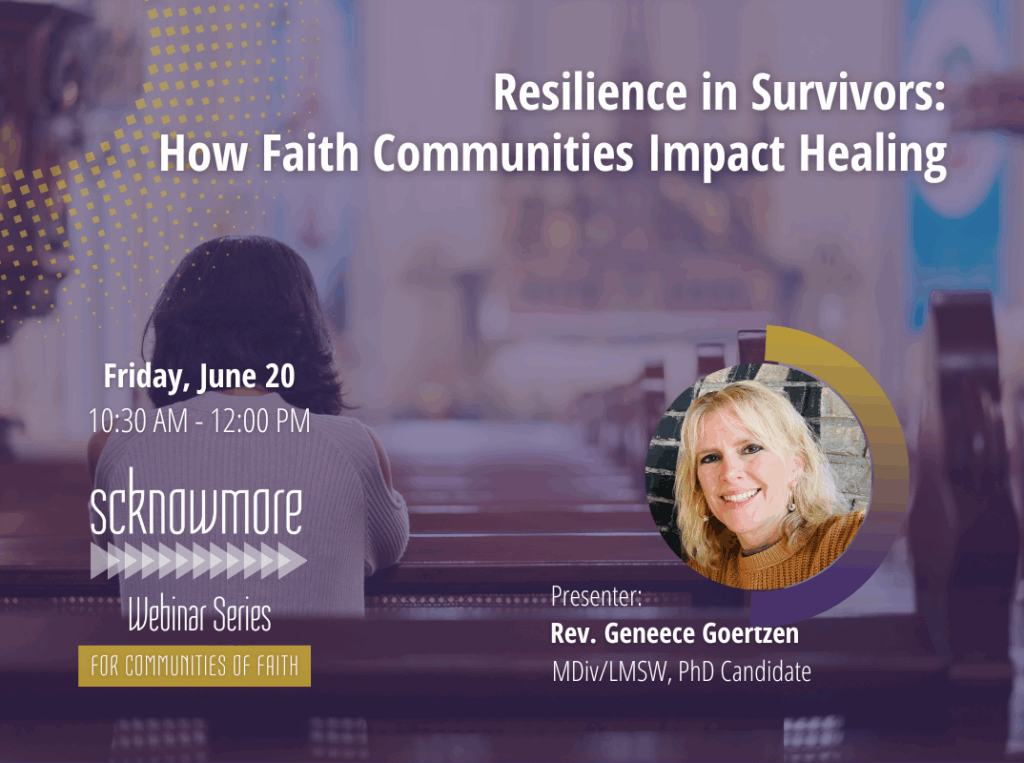
Part II: “Resilience in Survivors: How Faith Communities Impact Healing”

Resources for Faith Leaders:
The resources listed below include sermon outlines, suggested sermons, preaching tips, and other resources to assist faith leaders in responding to and preventing domestic violence in their communities. Please note that while these resources represent the Christian faith, SCCADVASA welcomes the opportunity to partner with leaders of other faith communities to develop this type of guidance. If you are interested in collaborating, please contact us at communications@sccadvasa.org.
Why It’s Important to Preach About Domestic Violence
Why it’s Important to Preach About Domestic Violence – Spanish
Tips for Preaching About Domestic Violence
Tips for Preaching About Domestic Violence – Spanish
Suggested Bible Readings: Old and New Testaments
Suggested Bible Readings: Old and New Testaments – Spanish
Sermon Outline: Old Testament – Spanish
Sermon Outline: New Testament – Spanish
Suggested Sermon: “Go and Do Likewise”
Suggested Sermon: “Whistling in the Dark”
How to Respond to Victims in Crisis
How to Respond to Victims in Crisis – Spanish
Additional Knowledge & Resources from the S.C. Faith-Based Task Force
Resources to Support Victims Experiencing Abuse Later in Life:
“Partnering to Address Faith and Safety: A Guide for Faith Leaders and Domestic and Sexual Violence Service Providers to Assist Older Victims of Abuse” (Safe Havens Interfaith Partnership Against Domestic Violence and The National Clearinghouse On Abuse Later in Life)
“Where Faith and Safety Meet: Faith Communities Respond to Elder Abuse” (Safe Havens Interfaith Partnership Against Domestic Violence and The National Clearinghouse On Abuse Later in Life)
“Bringing Together Faith and Safety for Older Adults” – English | Spanish (National Center on Elder Abuse, Safe Havens Interfaith Partnership Against Domestic Violence, and The National Clearinghouse On Abuse Later in Life)