

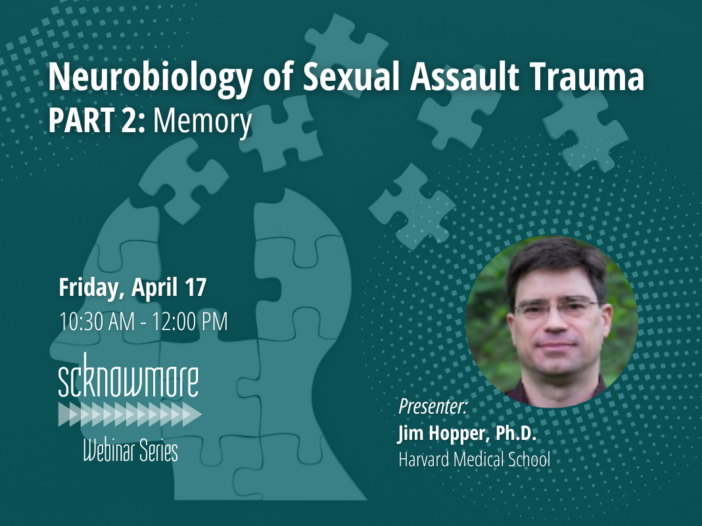
Description:
Traumatic experiences have immediate and powerful effects on the human brain. This presentation explains how stress and trauma can alter memory processes during sexual assaults and other traumas. Participants will learn key principles of memory processing and how they can be affected during extremely stressful experiences, including via impacts of the defense circuitry on the episodic memory circuitry. Participants will gain increased understanding of how and why trauma can alter memory processes, a critical foundation for learning and applying trauma-informed responses with people who have been assaulted.
Presenter:
- Jim Hopper, Ph.D., independent consultant and Teaching Associate at Harvard Medical School
Learning Objectives:
- Participants will be able to explain basic brain-based impacts of stress and trauma on memory encoding and storage, especially central vs. peripheral details.
- Participants will be able to describe the time-dependent ways in which stress can alter the encoding and storage of event details, including how they were sequenced in time.
- Participants will be able to describe the common impacts of alcohol on the storage of memories for stressful events.
This training has been approved for 1.5 hours of VSP credit.
This project was supported by Grant No. 15JOVW-25-GG-11292-MUMU awarded by the Office on Violence Against Women, U.S. Department of Justice. The opinions, findings, conclusions, and recommendations expressed in this program those of the author and do not necessarily reflect the views of the U.S. Department of Justice.
Event Link